Recycling and Sustainability for Landscaping Battersea
 Landscaping Battersea is shaped by a practical commitment to sustainability, where the handling of green waste, hard landscaping materials, and site packaging is planned with the same care as planting and design. Our approach to landscaping recycling in Battersea is built around simple but meaningful actions: sorting waste properly, reducing disposal journeys, and recovering as much material as possible for reuse or responsible processing. In an area where development, residential gardens, and communal outdoor spaces sit side by side, that commitment matters. We aim for a recycling percentage target of 85% across suitable project waste streams, with every job assessed for opportunities to separate timber, soil, metal, plastics, and organic material before anything is sent onward.
For Battersea landscaping sustainability, the focus begins on waste prevention. Where possible, materials are chosen for durability, repairability, and lower embodied carbon, while leftover stone, aggregate, and timber are measured so that orders match the work more closely. We also encourage careful segregation on site, because cleaner streams are easier to recycle. This is especially important in London boroughs that use distinct waste-separation systems and expect recyclable materials to stay uncontaminated. When garden clearances, paving removals, or turf replacements generate mixed waste, the team prioritises sorting at source so each load can enter the most suitable recycling route.
Local processing is an important part of that system. 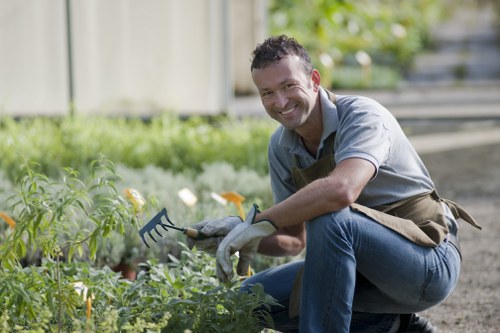 Our landscaping waste is directed, where practical, through nearby transfer stations and recycling facilities serving Battersea and the wider Wandsworth area. These transfer stations act as the bridge between site collections and specialist recovery plants, helping to keep transport efficient and support better material recovery. Green waste may go for composting or soil improvement processes, while inert waste such as broken concrete, bricks, and masonry can be screened and reused in secondary aggregates. This local routing helps reduce unnecessary mileage and supports a more circular method of working across landscape maintenance in Battersea and new installation projects alike.
Our environmental strategy also includes partnerships with charities and community organisations. Usable surplus materials, such as planters, timber offcuts, modular edging, tools, and decorative features, are assessed for donation when suitable. In some cases, gently used outdoor items can be passed to charities that support community gardens, training schemes, or social-value projects. This gives a second life to materials that would otherwise be discarded, extending the usefulness of products and reducing the demand for new manufacture. For Battersea landscape recycling, these charity partnerships are more than a diversion tactic; they are a way of linking professional landscaping with wider local benefit.
We also work with a procurement mindset that supports sustainability from the start. Packaging is reduced where possible, plant deliveries are consolidated, and high-quality bulk materials are preferred over heavily wrapped alternatives. Where plastic wrapping or pots cannot be avoided, they are separated into the appropriate recycling stream rather than mixed with general waste. In boroughs that emphasise careful waste separation, this attention to detail helps prevent recyclable items from being rejected at sorting facilities. It also makes the process clearer for teams on site, who know which materials are suitable for reuse, which should be recycled, and which require specialist disposal.
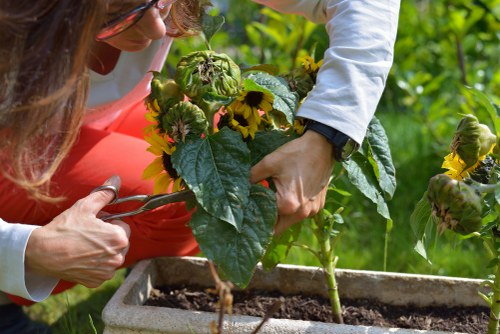 A major part of our low-impact approach is the use of low-carbon vans for site visits, collections, and local deliveries. These vehicles help reduce emissions associated with transport, especially on jobs that require multiple journeys for tools, plants, or waste movement. By combining delivery schedules and planning routes efficiently, we lower fuel use and cut congestion-related emissions. This is particularly relevant in Battersea, where access, parking, and traffic conditions can make transport a hidden source of environmental impact. Low-carbon vans support the wider aim of making every phase of the landscaping process cleaner, quieter, and more efficient.
The sustainability of a landscape does not end when the planting is finished. Ongoing maintenance matters too, and our methods are designed to support healthy soil, efficient water use, and minimal waste generation over time. Grass cuttings, prunings, leaves, and seasonal debris are handled as organic resources rather than simply waste, with composting and mulching used where appropriate. This fits well with local expectations around greener borough waste systems, where separated garden waste can often be recovered more effectively than mixed refuse. By treating green waste as a resource, Landscaping Battersea reduces disposal volumes and helps create a more self-sustaining outdoor environment.
Responsible material recovery also applies to soil and excavation work. Topsoil can sometimes be screened and reused on site, while clean hardcore and sub-base materials may be directed toward aggregate recovery. Even small landscaping projects can generate significant recyclable material when old paths, borders, decking, or retaining features are removed. Our goal is to keep these materials in circulation for as long as possible, limiting landfill use and supporting a lower-carbon construction cycle. This is why our landscaping recycling services in Battersea place as much emphasis on recovery planning as on the final design itself.
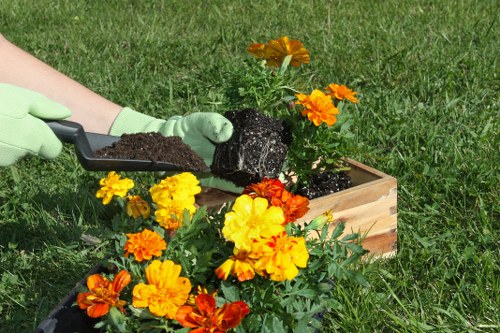 A practical recycling culture depends on the team understanding the value of every material stream. We therefore build sustainability into day-to-day work through sorting routines, load checks, and material tracking. Timber is separated from metal fixings, plastic is kept apart from green waste, and reusable stone is identified before disposal. Where suitable, items are assessed for refurbishment or donation, and where recycling is the best route, materials are sent through trusted local facilities that can handle them efficiently. This approach helps deliver a cleaner, more accountable service that aligns with Battersea’s growing focus on environmentally responsible outdoor spaces.
 Looking ahead, our recycling and sustainability goals remain focused on continual improvement. The 85% recycling target gives us a clear benchmark, but the real aim is to keep lowering waste intensity while improving the quality of recovered materials. With local transfer stations, charity partnerships, low-carbon vans, and borough-aware waste separation practices, Landscaping Battersea supports outdoor projects that are not only attractive but also environmentally considered. In a busy part of London, that balance of design, function, and responsibility is essential. By choosing methods that reduce waste and extend the life of materials, we help create landscapes that reflect the future of sustainable urban living.