Health and Safety Policy for Landscaping Battersea
 Health and safety is central to every landscaping project Battersea teams carry out. Whether the work involves turfing, planting, paving, hedge cutting, or routine maintenance, a clear policy helps reduce risk and protect workers, clients, visitors, and the surrounding environment. This policy sets out the standards expected on every site and supports a safe, well-managed approach to landscaping in Battersea.
All operations must be planned with safety in mind before any tools are lifted or machinery started. A competent supervisor should assess the task, identify foreseeable hazards, and confirm that suitable control measures are in place. This includes checking the condition of the ground, access routes, weather conditions, and any nearby structures, utilities, or fragile surfaces. Good planning prevents accidents and improves efficiency.
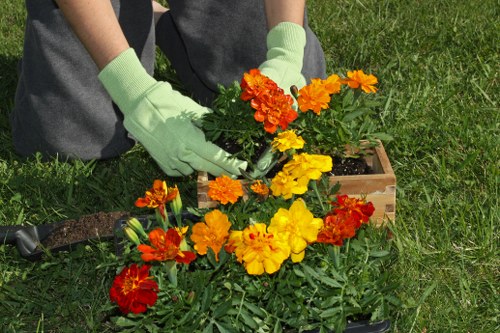 Every landscaper Battersea crews deploy must be trained to use equipment correctly and understand the limits of their own responsibilities. Workers are expected to follow site rules, report defects, and stop work if conditions become unsafe. Personal responsibility matters, but it must be supported by supervision, clear instructions, and an environment where concerns can be raised without delay.
Core Safety Principles
Risk assessments should be carried out for each project and updated when conditions change. The assessment must consider manual handling, slips and trips, machinery use, dust, noise, sharp tools, falls from height, and interaction with the public or residents. For landscaping services in Battersea, this is especially important where work may happen close to paths, driveways, or occupied premises. Controls may include barriers, signage, restricted access, and task rotation.
All tools and plant must be maintained in safe working order. Before use, operatives should inspect hand tools, power tools, cutting equipment, and compact machinery for damage, loose parts, leaks, or unsafe operation. Defective equipment must be removed from service immediately. Regular maintenance is not optional; it is a key part of the safety system for Battersea landscaping operations.
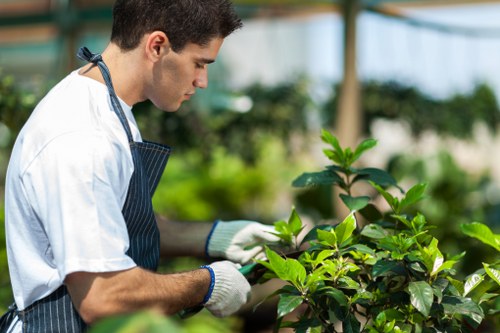 The use of appropriate personal protective equipment is mandatory where risks cannot be fully controlled in other ways. Depending on the task, this may include safety boots, gloves, eye protection, hearing protection, high-visibility clothing, and dust masks. PPE must fit properly and be kept in good condition. Workers should be trained to understand when and how to use it correctly.
Safe Working Practices
Manual handling is one of the most common causes of injury in landscaping. Teams should avoid unnecessary lifting, use mechanical aids where practical, and break down heavy loads into manageable parts. Where lifting is required, workers should be instructed in safe techniques, including planning the lift, keeping loads close to the body, and avoiding twisting. Careful handling protects both people and materials.
Working at height must be strictly controlled. Tasks such as tree pruning, installing features, or reaching elevated areas should only be undertaken with suitable equipment and only by trained personnel. Ladders should be used only for low-risk, short-duration work and when a safer alternative is not reasonably practical. Any platform, tower, or access system must be stable and inspected before use.
Where machinery is involved, the operator must be competent and authorised. This includes mowers, cutters, trimmers, compact loaders, and any powered equipment used on site. Guards and safety devices must never be bypassed. Refuelling should be done carefully, with engines switched off and away from ignition sources. For landscaping Battersea projects, traffic management and safe movement of equipment around pedestrians should always be considered.
Site Housekeeping and Environmental Safety
Good housekeeping reduces risk throughout the working day. Sites should be kept tidy, with waste, offcuts, cords, and loose materials cleared as work progresses. Tools must be stored safely when not in use, and walkways should remain as free from obstruction as possible. Clean, orderly sites support safer landscaping services and help prevent slips, trips, and falls.
Weather conditions can change how work should be managed. Wet surfaces increase slip risks, strong winds affect lifting and working at height, and extreme heat or cold can reduce concentration and physical tolerance. Supervisors should adapt tasks to suit the conditions and stop work if the risk becomes unacceptable. Protecting the team is more important than meeting a schedule.
Noise, dust, fumes, and vibration should be kept under control wherever possible. Equipment selection, task timing, and safe working distances can all reduce exposure. If soil disturbance creates dust, appropriate suppression methods should be used. When noise levels are high, hearing protection and time limits may be necessary. Environmental awareness is part of a responsible health and safety policy.
Training, Communication, and Reporting
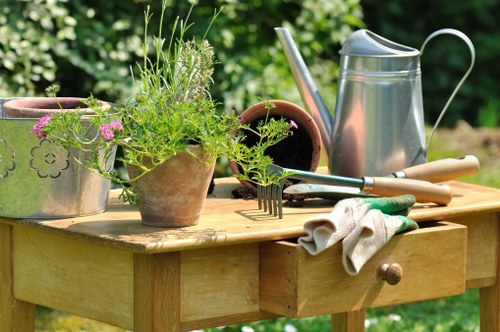 Communication must be clear before, during, and after each job. Site briefings should cover hazards, control measures, emergency arrangements, welfare provisions, and any limitations on access. Workers should know who is in charge, how to raise concerns, and what to do if conditions change. A strong safety culture depends on consistent communication and shared expectations.
Training should be provided for all relevant tasks and refreshed when new equipment, methods, or risks are introduced. This includes induction for new starters, toolbox talks, and supervision for less experienced workers. Records of training and equipment checks should be kept as part of the company’s management system. Competence is essential for safe performance in Battersea landscaping work.
All incidents, near misses, and hazards must be reported promptly and investigated thoroughly. The aim is to learn from events and prevent recurrence, not assign blame. Corrective action should be taken quickly, and findings should be shared where appropriate. This approach strengthens the overall safety standard across all landscaping activities.
Emergency Preparedness and Review
 Emergency procedures must be understood by everyone on site. The plan should cover first aid, fire response, evacuation, contact with emergency services, and actions to take if a utility line is damaged. First-aid supplies should be accessible, and at least one trained person should be available when work is underway. In urgent situations, calm and decisive action can prevent a minor issue from becoming serious.
This health and safety policy for landscaping Battersea will be reviewed regularly to ensure it remains effective, practical, and aligned with current working methods. Reviews should follow incidents, significant changes in equipment or staffing, and periodic management checks. A policy only has value when it is used, understood, and improved over time.
By following these principles, Battersea landscaping teams can deliver high-quality outdoor work while maintaining a safe and responsible workplace. The commitment to safety applies to every project, every worker, and every stage of the job.